


Coca-Cola
Coca-Cola was invented in 1886 by John Pemberton, a pharmacist from Atlanta, Georgia, who made the original formula in his backyard. The recipe contained cocaine—in the form of an extract of the coca leaf, which inspired the “Coca” part of the name. The “Cola” part came from another ingredient, the kola nut, which contains caffeine. At the time, cocaine was legal and a common ingredient in medicines. Obviously, the Coke you buy today does not contain cocaine—but it remained an ingredient well into the 1900s. But by 1929, with public pressure and Prohibition against alcohol in full force, the company had to remove all traces of cocaine. While the modern-day recipe for Coke is a highly prized company secret, some believe that the beverage still contains a non-narcotic form of coca-leaf extract…as it would have in 1929. While cocaine-infused beverages may seem far-fetched to us, these drinks were quite common in the late 19th century. Cocaine was not illegal in the United States until 1914. Until then, the substance had a variety of medical uses. Cocaine tonics, powders, and pills were believed to cure a variety of symptoms including headache, fatigue, constipation, nausea, and asthma. In 1889, an Atlanta pharmacist named Asa Candler purchased the formula from Pemberton and, in 1892, created the Coca-Cola Company. When he began advertising Coke as a beverage available across America, the drink still contained a trace amount of cocaine. After the cocaine was removed in 1929, Coke grew in popularity as a “soft drink” alternative to “hard” alcoholic beverages—and today it remains one of the largest soft drink companies in the world.
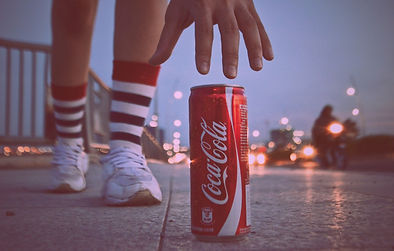


Finding the perfect soda
There are so many different types of sodas out on the market today and many are different colors as well as flavors! Find your perfect soda in stores now!

ICE
COLD
Refreshing
Pepsi
Pepsi was created in 1893 by Caleb Bradham in his Drug Store in New Bern, North Carolina. The original name of this new drink was called “Brad’s Drink” after Caleb Bradham himself. It was made with a mix of sugar, water, caramel, lemon oil, nutmeg, and cola nuts. On August 28th, 1898, Brad's Drink was renamed to Pepsi after the pepsin enzyme. Bradham believed that his drink was a “healthy” cola that helped with digestion. Pepsi sales began to rise as word spread of a new drink in North Carolina. The first two franchised bottling plants were established in Charlotte and Durham, North Carolina, in 1905. Demands continued to rise as 300 more plants were opened across 24 states. Pepsi was an innovator of its time, being one of the first products to be shipped via motor transport. After the United States passed the Food and Drug Act of 1906 that banned dangerous chemicals from the public’s food and drugs, Pepsi stood strong as it was only made with natural ingredients. This converted many Americans to try Pepsi Cola, since it was a much safer alternative. Following the increase of sugar costs in World War I (from 3 cents/pound to 28 cents/pound), Bradham was forced into bankruptcy—which would only be the first of many in Pepsi’s history.


